


Your bank fits in your pocket and your groceries arrive within the hour, but healthcare somehow didn’t get the memo.
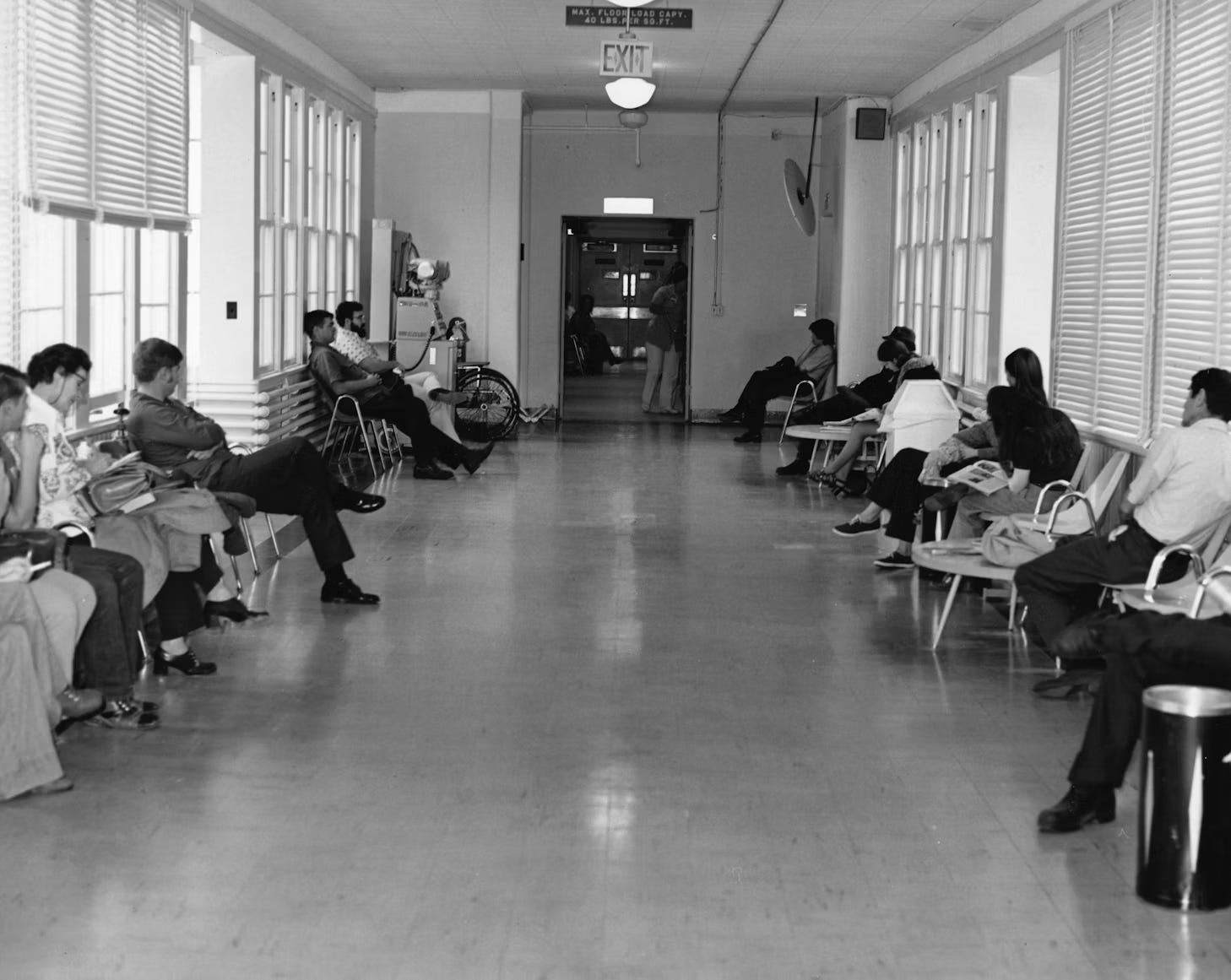
When you feel unwell, you still ring a receptionist at 8am sharp, hoping to win an appointment that ends up being three weeks away, then travel to a building and sit among other sick people for 60 minutes, to see a doctor who is reading your file for the first time.
When it matters, people still want to be seen by a real doctor, but they don’t want to wait three weeks! On the flip side, doctors also shouldn’t have to spend the majority of their time addressing repeat, mild problems that can be solved outside the clinic.
Only 5% of medical claims touch a screen at any point, and half of those are therapy sessions (FAIR Health). It feels a bit like healthcare is stuck in the stone tablet age.
The prize for fixing this is absurd. Health is the largest sector of the real economy, roughly $10 trillion a year, a tenth of everything humanity produces. And no technology company has come near the scale the sector serves. There has never been a better time to build the next generation healthcare company!
How we think care should work in Europe
The first door into any health system is primary care, the GP or family doctor you see about anything and everything; behind it sits secondary care, the cardiologist or dermatologist you get referred on to. And beyond that, surgery and hospital wards (tertiary).
But what could this new system look and feel like?
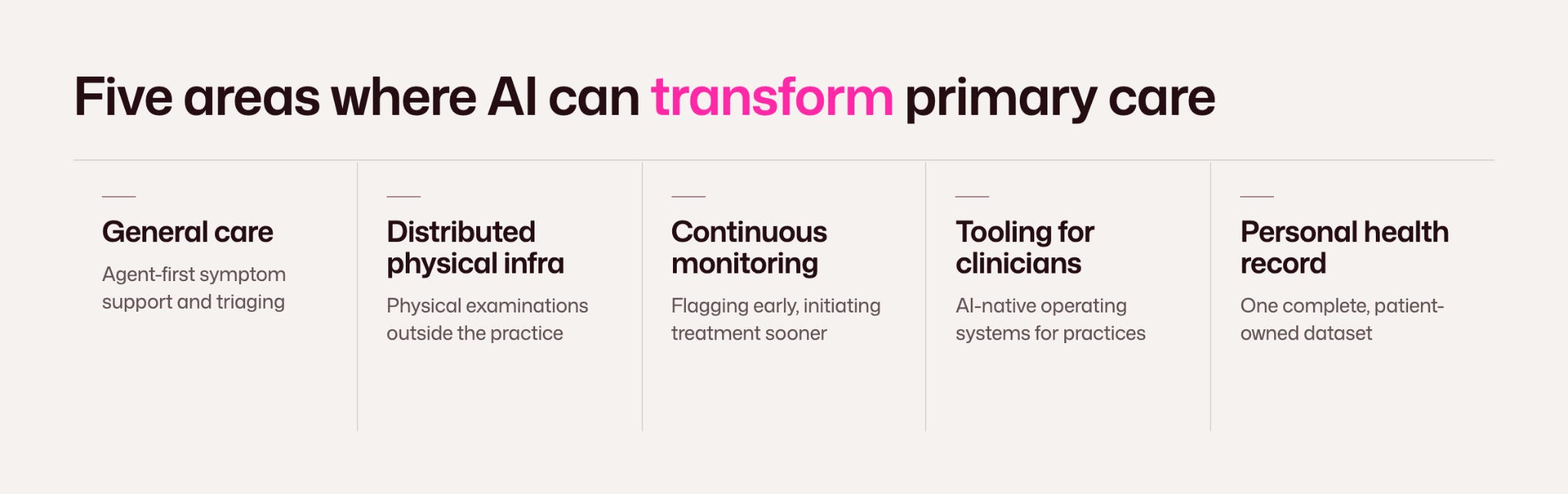
We see five key areas where AI can transform the current system and where it is only a question of time until this becomes the new normal.
Run the clock forward and everyday care will look fundamentally different. It is pretty clear to us what it will look like, we only can’t tell when the innovation will be able to cut through the complex incentive systems of the different European healthcare systems.
We expect that cases open with a conversation with an agent that has read your whole history, and many can be closed there too. When a human is needed, the consultation happens on video within hours, prepared so the doctor’s minutes are spent on judgement. More pressing conditions are spotted early from continuous monitoring. The blood draw happens at the pharmacy downstairs, and the follow-up at your kitchen table with a nurse whose route an agent planned. You are routed to the relevant specialist who has capacity and can see you in time to address the problem before it becomes something more serious.
Where we stand today
The current system is jammed! And on top of that, populations are ageing, chronic disease is climbing, and the supply of GPs is shrinking through burnout and retirement.
The result is the 8am phone lottery and waits measured in months, while clinicians spend most of their day on the repetitive 90% of cases any of them could handle in their sleep. Fall ill outside office hours and the only door still open is the emergency department, which is why A&Es everywhere are full of people who need a GP, rather than emergency care.
The medicine is mostly fine, but the distribution model belongs to another century. And demand will keep climbing for decades, so a system already past capacity cannot simply be patched.
There have been many attempts in the past to change this. For example, the Germany-based Ada health, a personal health companion, helping you self-diagnose and check symptoms. They raised nearly $200 million from investors, but have struggled to scale and become a de facto personal health assistant.
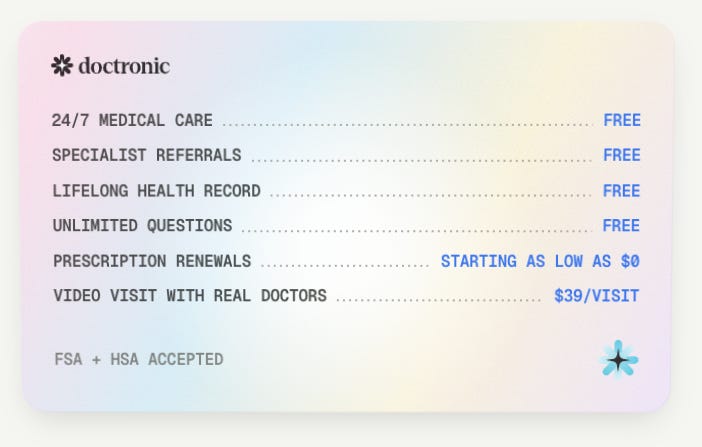
The more effective examples of transforming primary care that we see are in the US. Such as Doctronic, building the first specialised AI doctor, where personalised, in-pocket primary care doesn’t cost an arm and a leg. The company has more than 300k weekly users, growing 15x YoY. It was also the first AI-native platform to autonomously renew prescriptions.
Another US example is Counsel Health, where you can speak to a virtual doctor for free and bring in a real doctor at any point. You can have unlimited access to real doctors for around $200 per year.
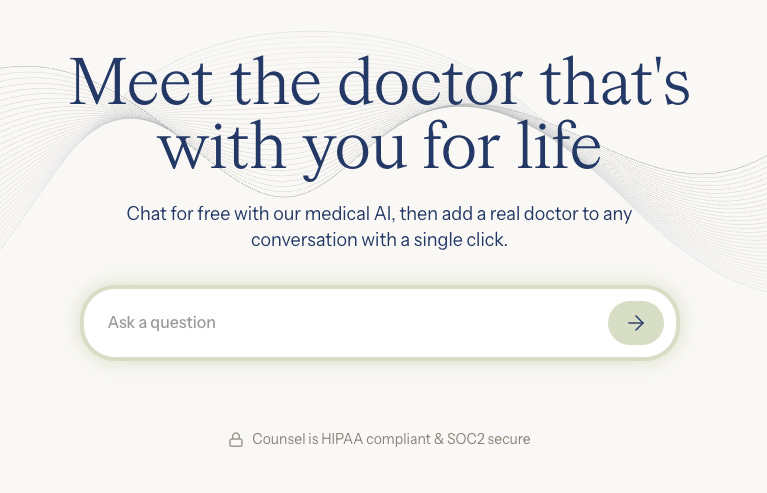
Counsel and Doctronic weren’t born into a system that had already solved this problem. They started out of the observation that in the US it took more than 30 days to see a primary care doctor.
When will this happen in Europe? How will this fit into the European health system? Who will distribute this?
Why the US leads the way
The vision we painted of a future primary care system is pretty obvious, and it’s not rocket science. But we have only seen this at scale in the US market, where the pressure for efficiency is MUCH higher.
Historically, Europe has been unable to achieve this transformation largely because of the market structure. In the US, people pay for their healthcare, and hence the pain point of costly GP consultations and tests is acutely felt. Patients have options and can vote with their wallets, choosing the providers that offer a high-quality service and/or offer this cheaply.
In most European countries, the provider, payer and patient are all different stakeholders with not necessarily overlapping interests. The providers are often small, so not able to launch their own AI assistants. The payers have no influence on the treatment and are only used as “payers” not “players” at least at the moment. And the patients are powerless - they need to consume what their doctors tell them and what the payers pay for them.
The UK is a little different, where the NHS is both the payer and the provider. In theory there is a great incentive to deliver efficiency in the way primary care is delivered, however, as the NHS is a government entity it lacks the incentives and efficiency of a capital-market-oriented organisation. As a result, things take much longer to implement than private organisations would.
However, we believe that the skyrocketing costs in the healthcare systems will put the critical pressure on the system to adapt much faster to the new AI enabled capabilities. As a result, we expect a much more efficient healthcare system going forward, enabled by agents and other solutions. Over the coming weeks, we will go deeper in each of the sectors we mentioned above and give more examples how we expect AI will transform the primary care landscape in the coming years.
Stay tuned.
I imagine (hope!) healthcare systems of the future will shift in spend / time / energy from reactive care to preventative holistic care.