

Today we are excited to launch The AI Native Team, with our friends at firstminute capital!
Over the past six months, our portfolio founders kept asking the question of what “great” looks like in terms of adopting AI. How much is AI actually changing how teams work? What are the best AI-native teams doing?
The honest answer was that whilst we had plenty of anecdotal evidence, we didn’t have any actual data.
Most of the published research has either taken the enterprise lens (where adoption is genuinely slower) or focused narrowly on engineering, which leaves founders trying to triangulate between papers that don’t match what they’re seeing in their own teams and what a friendly investor happened to say at dinner. We wanted something more concrete, so we built it.
We surveyed early-stage teams across engineering, sales/GTM, finance and talent, asking what’s changed in the last twelve months: the metrics that have moved, the tools they actually use, the processes they’ve rebuilt, the team shapes they’ve changed. The result is The AI Native Team, which went live today.
A few of the things that stood out for us:
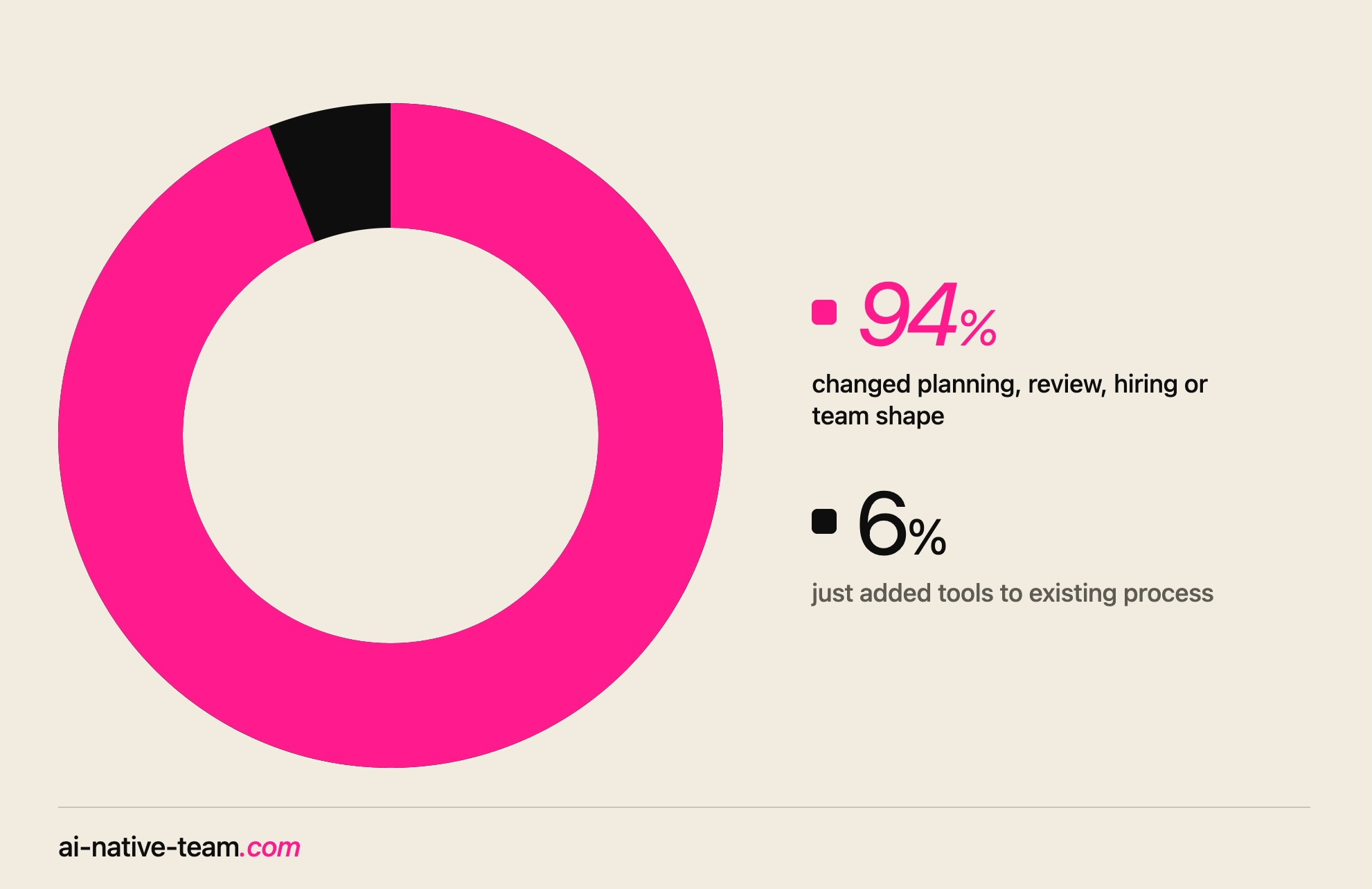
This isn’t really a tools story, it’s an operating model story. 94% of teams have restructured something operational alongside adopting AI, whether that’s planning, code review, hiring criteria, or team shape. Only 6% have just bolted AI tools onto their existing process. The teams seeing the biggest gains are the ones who treated AI as a reason to redesign how the work happens, not as a faster horse.
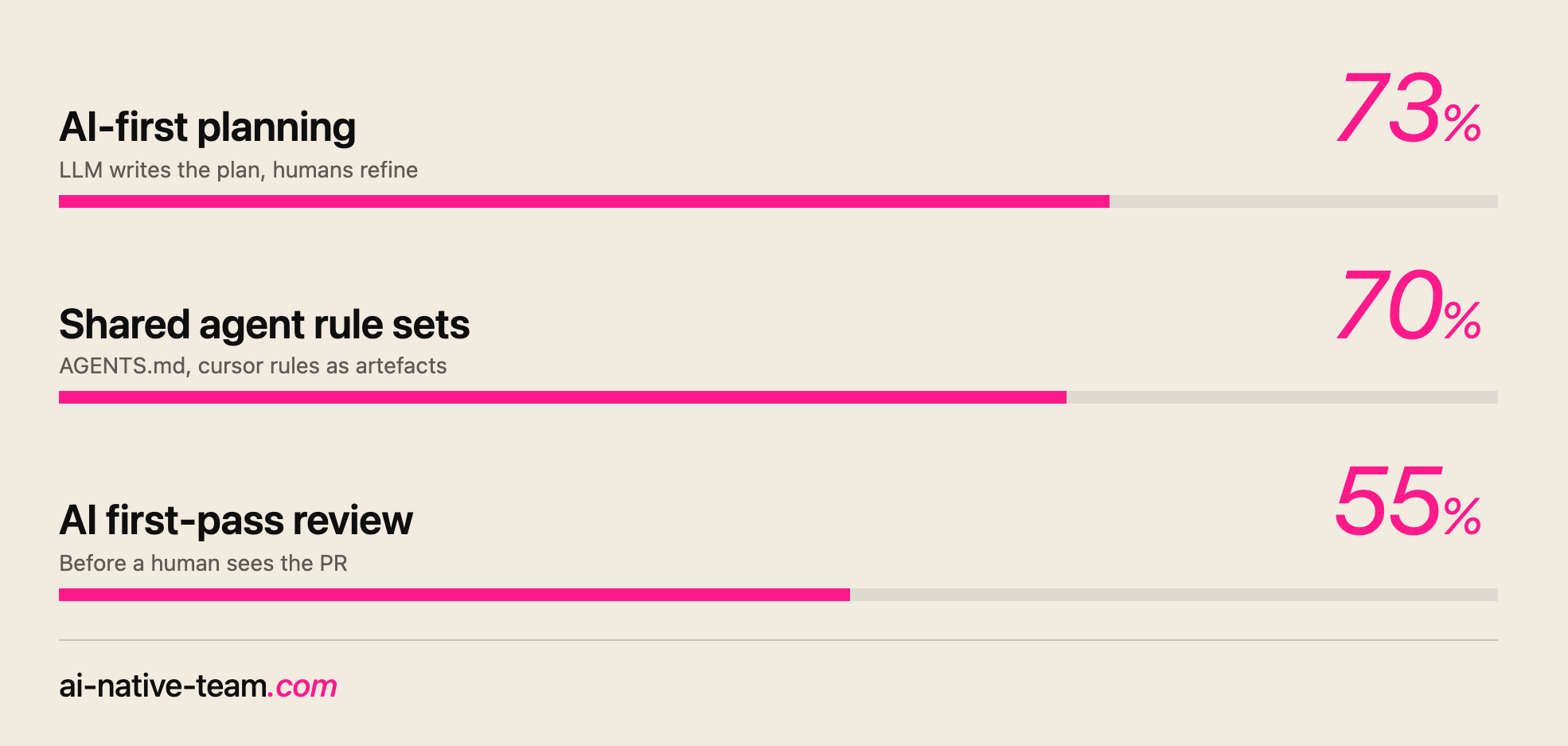
Engineering has been rebuilt around AI in less than two years. 73% of engineering teams now do AI-first planning, where the LLM writes the plan and humans refine it. Eighteen months ago, none of these practices even had names. Today they’re at majority adoption in our cohort.
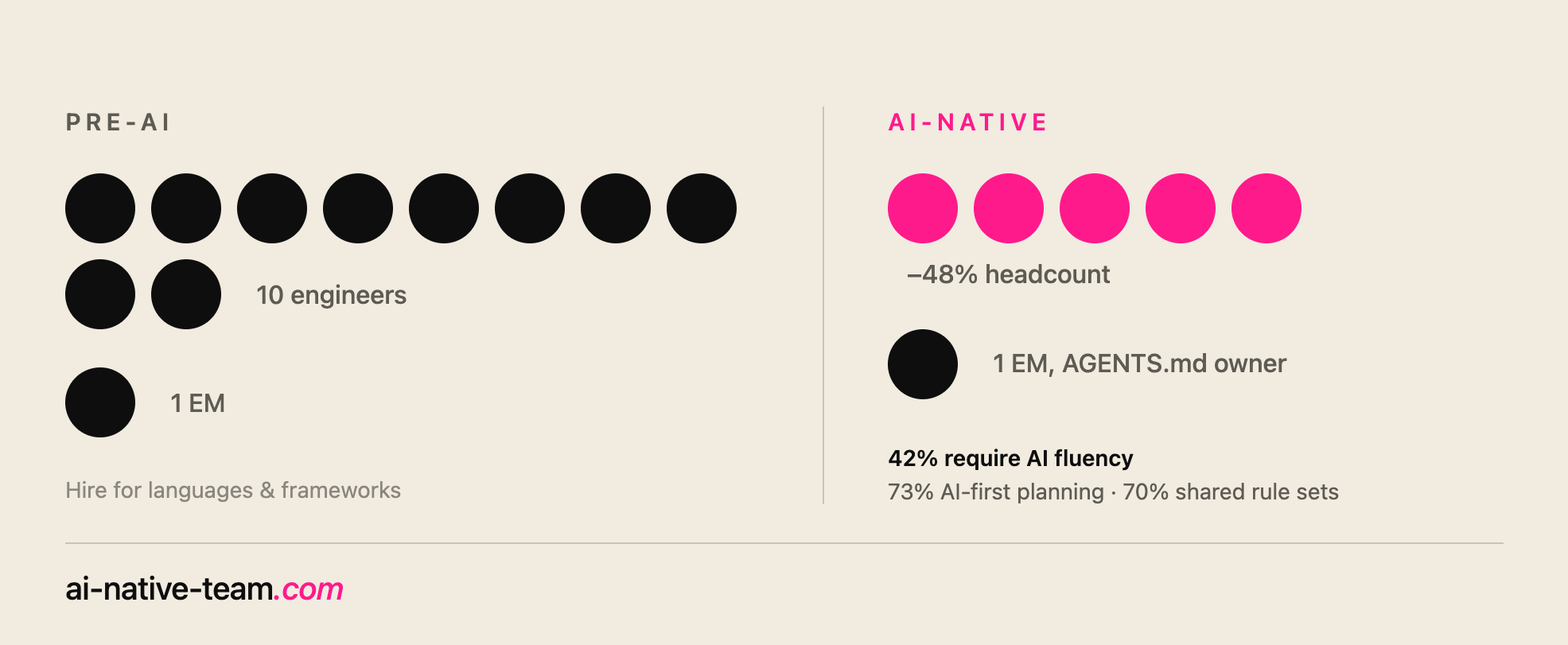
The shape of the engineering team has changed with it. 48% of teams have actively reduced engineering headcount since adopting AI, and 42% have raised the bar on hiring criteria to explicitly require AI fluency. Hire-for-languages-and-frameworks is becoming hire-for-the-ability-to-direct-agents.
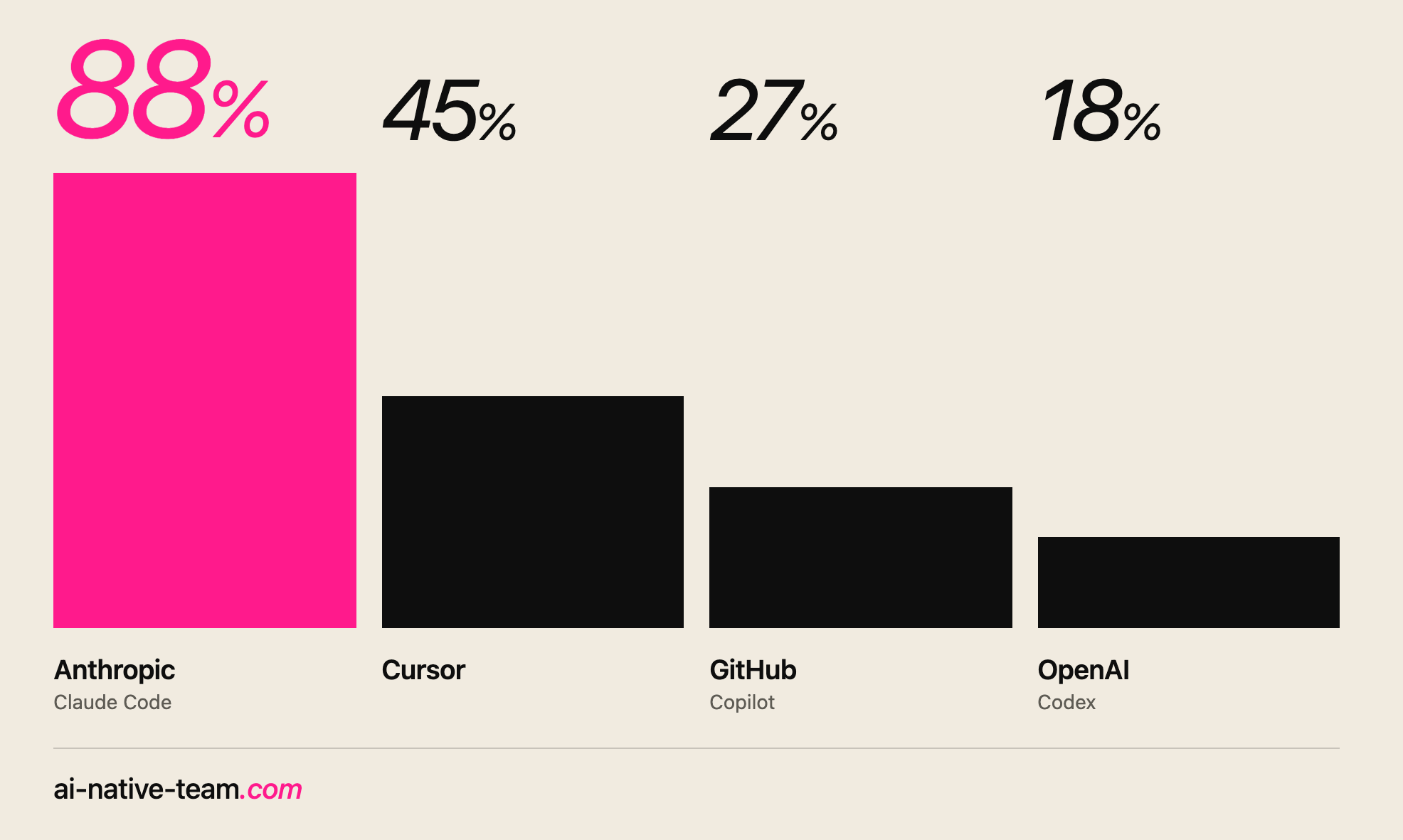
Anthropic has taken European engineering. Claude Code is at 88% adoption in our cohort, more than three times ahead of GitHub Copilot and Codex combined. For a category that was Microsoft-default in mid 2024, that’s one of the faster market inversions we’ve seen in this part of the stack.
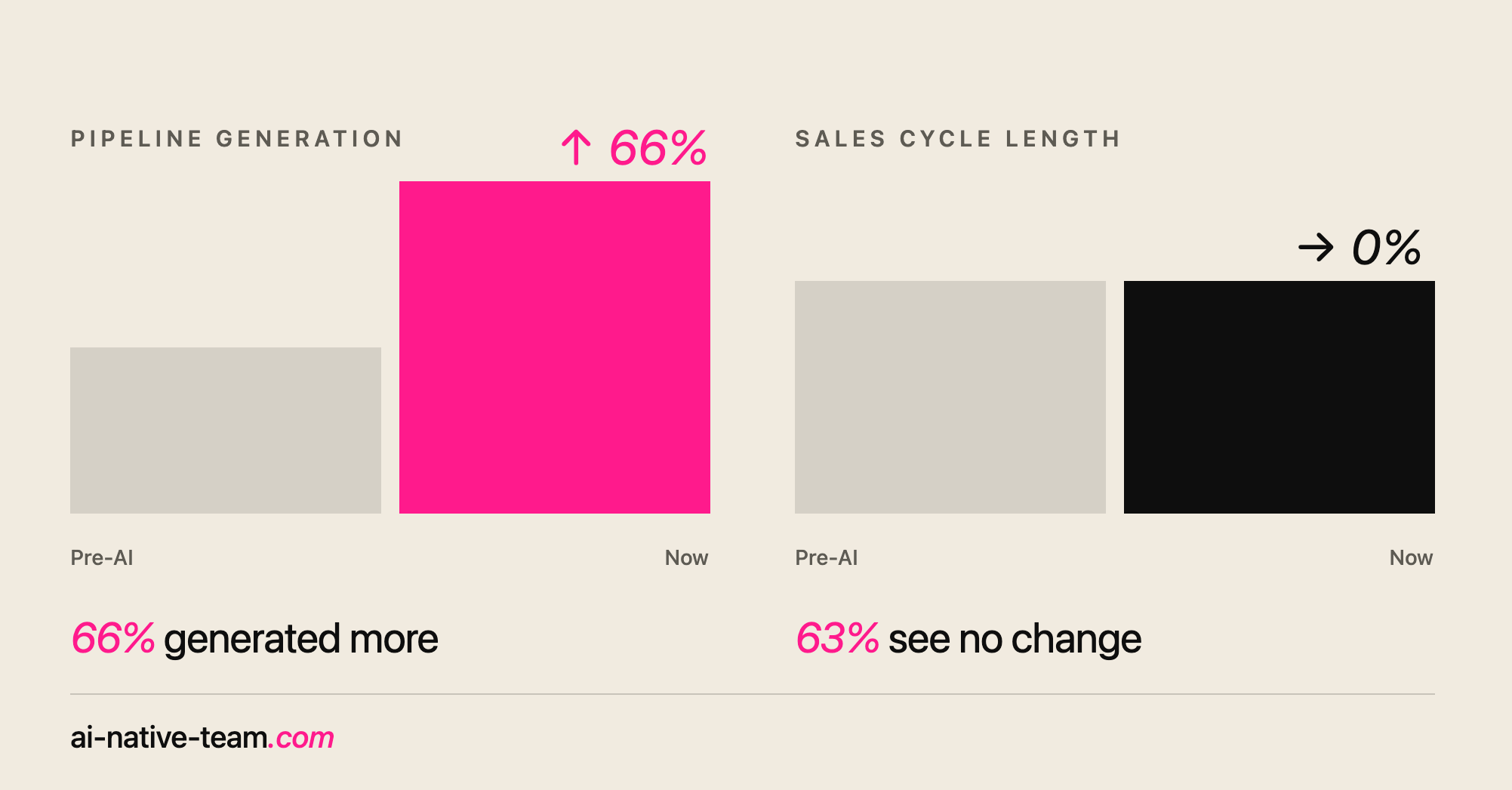
Not every function looks like engineering yet. In sales, AI has made the pipeline 66% bigger on average, but 63% of teams say the sales cycle hasn’t moved. Same story in talent, where every team in our data has cut admin hours per hire, but only 20% have actually shortened time-to-hire. AI is generating real capacity in those functions today. The next twelve months are about whether it also reaches the back end of the process and converts that capacity into outcomes.
This is now a living benchmark - we will continue to gather data through the site, to evolve the benchmark, releasing an edition 2 in the coming months. Anyone can add their data anonymously and see how their team compares against their peer set.
We’d love to hear from you. If you haven’t already, you can add your data simply by selecting the ADD YOUR DATA button.
Thanks to Abby, Adriana and Lina from firstminute capital for working with us on this. We couldn’t have done it without you!